Learn to differentiate natural fur from faux fur
Shopping for luxury outerwear requires a keen eye for detail and quality. Many high-end imitations look convincing at first glance, but natural fur offers unmatched warmth and texture. Understanding the physical properties of genuine pelts ensures you make a wise investment. In this guide, we reveal the professional secrets to spotting authentic pieces instantly.
The Essential Tests to Verify Natural Fur Quality
Identifying a genuine garment does not require lab equipment. You can perform several simple checks right in the boutique. These methods help you distinguish high-quality hides from synthetic alternatives.
The Feel Test: Softness and Underfur
Authentic natural fur usually features two distinct layers. You will find long, silky guard hairs on the surface. Beneath these, a dense, soft underfur provides the primary insulation. In contrast, faux fur often feels slightly sticky or plastic-like between your fingers.
The Pin Test: Checking the Base Material
Push a fine sewing pin through the base of the garment. If it slides through easily, the item likely has a synthetic fabric backing. However, if the pin meets resistance, you are dealing with a leather hide. This is a definitive way to confirm the presence of a real animal pelt.
Understanding Popular Varieties: From Natural Mink Fur to Sable
Different animals produce unique fur characteristics. For instance, natural mink fur is famous for its incredible shine and short, uniform nap. It remains one of the most durable options for daily wear. Furthermore, natural sable is even more luxurious, offering a “silky” feel that synthetic fibers cannot replicate.
The Distinctive Texture of Natural Fox Fur
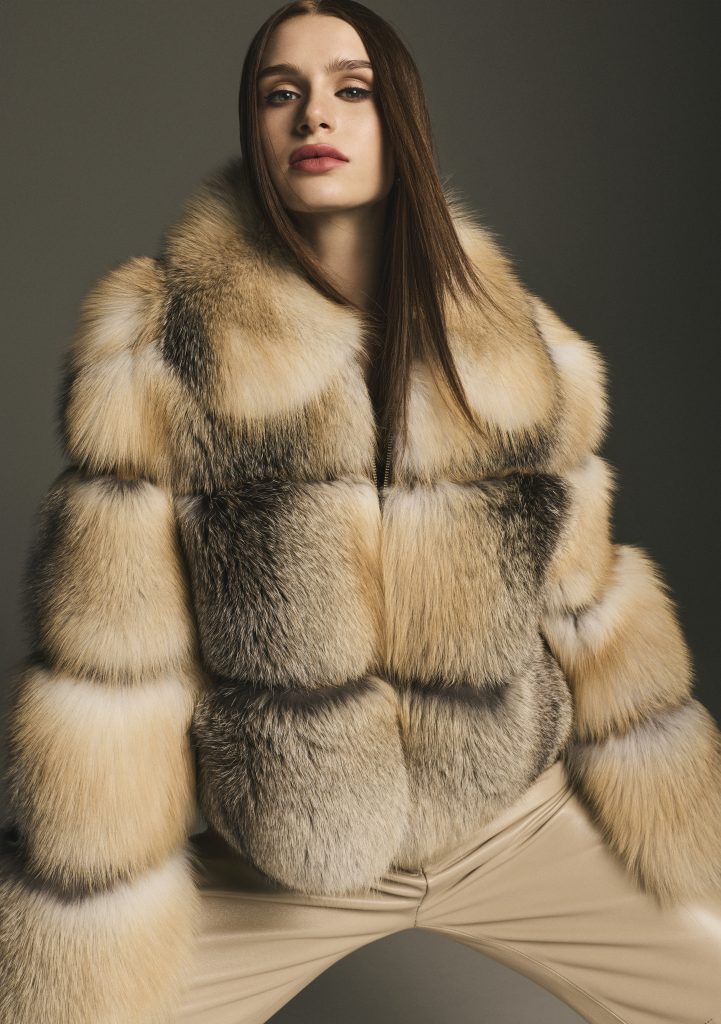
If you see long, fluffy hairs with a lot of movement, you are likely looking at natural fox fur. This variety adds significant volume and glamour to any collar or coat. Unlike synthetic versions, fox fur tips are usually tapered and soft rather than blunt or sharp.
Why Natural Shearling Fur Stands Out
Many people confuse wool with synthetic blends. However, natural shearling fur is simply sheepskin that has been tanned with the wool left intact. It feels incredibly breathable and regulates temperature naturally. Therefore, it keeps you warm without the “sweaty” feeling often caused by faux fur linings.
Natural Fur vs. Faux Fur: The Durability Gap
Synthetic fibers are essentially plastic, which means they degrade and shed over time. Conversely, natural fur can last for decades if stored correctly. Statistics show that a well-maintained mink coat can last 30 years or more. Consequently, the cost-per-wear of a natural garment is significantly lower than a cheap imitation.
Professional Tips for Sustainable Fur Shopping
Always buy from reputable brands that prioritize ethical sourcing. Check for certifications that guarantee the origin of the pelts. High-quality craftsmanship is visible in the seams and the lining. Therefore, a heavy, well-constructed garment is usually a sign of authenticity.